NKENNEAi Speech: First Live Demo — Swahili STT + TTS
Watch our Speech-To-Text and Text-To-Speech models run live on real African language audio, accents, code-switching, background noise. Unscripted.
Here is What You'll Learn
A live African language translation demo
Speech-to-text and text-to-speech, running on real-world audio — accented speech, code-switching, background noise. No pre-recorded reel.
Why generic models fail on African languages:
Tone, code-switching, and named entities are where the big providers break — and what that failure costs you in IVR deflection, support handle time, and customer trust.
How you’d actually deploy it:
API surface, latency, deployment options, and the language roadmap after Swahili: Nigerian Pidgin, Yoruba, Igbo, Somali and more
We’re offering 50 complimentary test tokens.
To all webinar attendees so you can evaluate NKENNEAi in real-world conditions.

Sheikh Abdul Bari
Head of Engineering, NKENNEAi
Engineering the Future of African Language AI
Shaikh Abdul Bari is Head of Engineering at NKENNEAi, bringing over 8 years of experience in AI, machine learning, and software engineering. He leads the company's AI engineering initiatives, building practical, reliable AI solutions for African languages — including Speech-to-Text (STT), Text-to-Speech (TTS), text translation, and speech translation — with a strong focus on scalable models designed for real-world deployment.
His role is uniquely full-stack: he develops the AI models that power these features, and also architects the backend infrastructure that makes them scalable and reliable at production level. It's this end-to-end ownership — from the model itself to the systems that deliver it — that allows him to turn innovative ideas into robust, real-world applications used across Africa's multilingual markets.
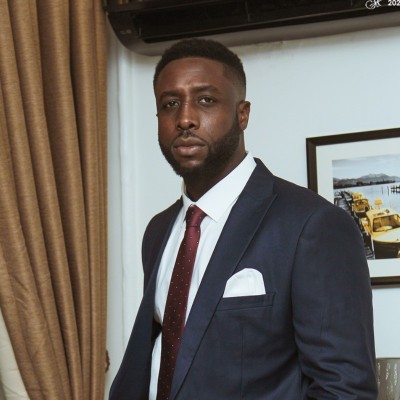
Michael Odokara-Okigbo
CEO & Founder, NKENNEAi
Pioneering the Future of African Language Translation
NKENNEAi builds African-language AI infrastructure: translation, speech-to-text, and text-to-speech, engineered tone-first rather than retrofitted from English-centric models.
The company’s consumer app, NKENNE, has taught more than 400,000 learners across 15 African languages. That work produced what NKENNEAi now runs on: a tonally annotated, dialectally validated language data pipeline — the part of this problem that can’t be scraped.
Backed by National Science Foundation research support and partnered with Nigeria’s National Information Technology Development Agency, NKENNEAi is deployed toward telecom operators, fintechs, health systems, and public institutions serving Africa’s multilingual markets.
Michael’s position is simple: African languages should not be an afterthought in the AI era.
